

What is the rise time of optical transceivers?
Sep 30, 2026
Leave a message
In the fast - evolving landscape of modern communication, optical transceivers play a pivotal role. As a reliable optical transceivers supplier, I'm deeply involved in both the production and the technological aspects of these devices. One of the essential parameters that we frequently discuss is the "rise time" of optical transceivers.
The Basics of Rise Time
Let's start with the fundamental concept. Rise time, in the context of optical transceivers, measures the time taken for the output signal to go from a specified low value to a specified high value. It is an important metric because it reflects how quickly an optical transceiver can transition from an off - state (or a low - power state) to an on - state (or a high - power state).
Typically, the low value is set at 10% of the final signal amplitude, and the high value is set at 90% of the final amplitude. This standard definition provides a consistent way to compare the performance of different optical transceivers.
When we think about a simple electrical or optical signal, it doesn't just instantly switch from low to high. There is a transient period during which the signal gradually ramps up. The duration of this ramp is the rise time. For example, in a digital communication system where data is transmitted in discrete pulses, the rise time determines how quickly the transceiver can send the leading edge of a pulse.
The Significance of Rise Time
Why is rise time so crucial? Well, in high - speed data transmission, rise time directly impacts the data rate and the signal quality. In modern networks, such as data centers, telecommunications, and high - performance computing, the demand for higher data rates is insatiable. A shorter rise time allows for faster signal transitions, which in turn enables higher data transmission speeds.
Let's consider a scenario where we are transmitting data at a very high rate. If the rise time is too long, the individual pulses in the data stream may start to overlap. This overlapping, known as inter - symbol interference (ISI), can severely degrade the signal quality and make it difficult for the receiver to accurately decode the transmitted data. As a result, the system may experience high error rates, leading to reduced reliability and performance.

For instance, in a 10Gbps SFP+ Active Optical Cable, a short rise time is essential to ensure that the 10 gigabits per second data rate can be maintained without significant signal degradation. The transceiver needs to be able to quickly switch between 0s and 1s, and a short rise time facilitates this rapid switching.
Factors Affecting Rise Time
Numerous factors contribute to the rise time of an optical transceiver. One of the primary factors is the design and characteristics of the semiconductor components within the transceiver. Light - emitting diodes (LEDs) and laser diodes are commonly used as light sources in optical transceivers. The physical properties of these diodes, such as the carrier recombination time and the drive current, can significantly affect the rise time.
For example, in a laser diode, the time it takes for the carriers to recombine and emit photons determines how quickly the light output can increase. If the carrier recombination time is long, the rise time of the optical signal will also be long. Manufacturers often optimize the design of the semiconductor devices to minimize this recombination time and reduce the rise time of the transceiver.
Another factor is the electrical circuitry associated with the transceiver. The driving circuit that provides the electrical signal to the light source needs to be designed to deliver a fast - rising electrical pulse. Capacitance and resistance in the circuit can slow down the electrical signal transition, thereby increasing the rise time. Advanced circuit design techniques, such as the use of low - capacitance components and high - speed switching elements, are employed to reduce the impact of these electrical factors on the rise time.
The optical coupling and transmission medium also play a role. Losses in the optical fiber, such as chromatic dispersion and attenuation, can cause the optical signal to spread out in time, effectively increasing the rise time. When using different types of optical fibers, the rise time characteristics of the transceiver may vary. For example, single - mode fibers generally have lower dispersion compared to multi - mode fibers, which can help maintain a shorter rise time for long - distance transmissions.
Rise Time in Different Types of Optical Transceivers
Different types of optical transceivers have different requirements and typical rise time values. Let's take a look at some common transceiver types.
The 622Mbps SFP is a relatively low - speed transceiver. At this data rate, the rise time requirements are not as stringent as in higher - speed transceivers. However, a reasonable rise time is still necessary to ensure reliable data transmission. The rise time for a 622Mbps SFP transceiver is typically in the range of a few nanoseconds.
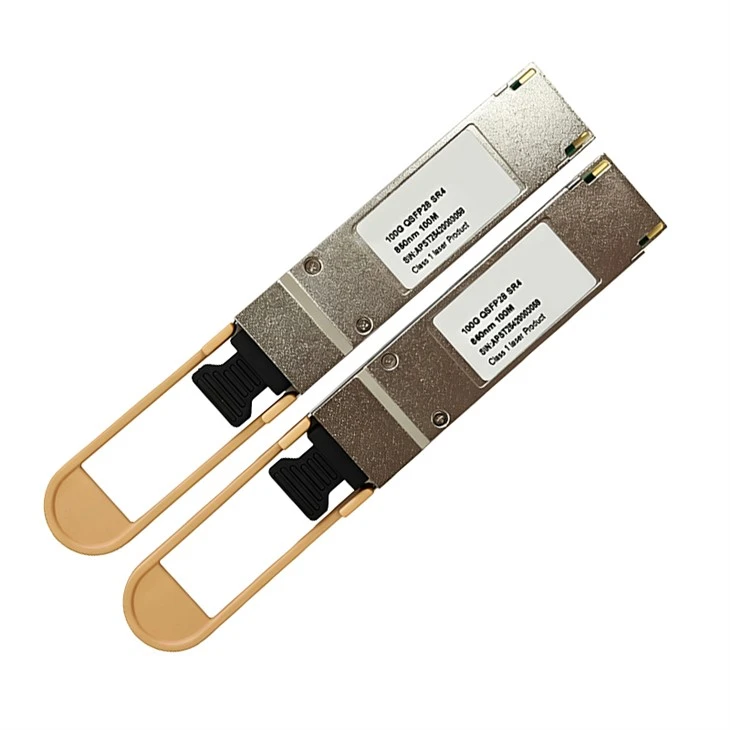
Moving up the speed ladder, the 100Gbps QSFP28 is designed for high - speed data center applications. With a much higher data rate, the rise time needs to be extremely short. These transceivers often have rise times in the sub - nanosecond range. Achieving such short rise times requires advanced semiconductor technology, high - performance electrical circuits, and careful optical design.
The 400Gbps QSFP - DD Active Optical Cable represents the next generation of high - speed optical transceivers. At this data rate, the rise time requirements are even more demanding. The transceiver must be able to switch signals at an incredibly fast pace to support the 400 gigabits per second data rate. The rise time for these transceivers is typically on the order of picoseconds, which requires state - of - the - art technology and manufacturing processes.
The emerging 800G OSFP112 and QSFP - DD transceivers are pushing the boundaries even further. As the data rate doubles from 400G to 800G, the rise time needs to be even shorter to avoid inter - symbol interference and maintain signal integrity. These transceivers are at the forefront of optical communication technology, and research and development efforts are focused on achieving the shortest possible rise times.
Measuring Rise Time
Accurately measuring the rise time of an optical transceiver is crucial for both manufacturers and users. There are several methods available for measuring rise time. One common approach is to use an oscilloscope. The optical output of the transceiver is first converted to an electrical signal using a photodetector. The electrical signal is then fed into the oscilloscope, which can display the waveform of the signal. The oscilloscope can measure the time difference between the 10% and 90% amplitude points of the signal, giving the rise time.
Another method is to use a high - speed sampling system. These systems are designed to capture high - speed signals with high precision. They can provide more accurate measurements of the rise time, especially for very short rise times in high - speed transceivers.
Our Commitment as a Supplier
As an optical transceivers supplier, we are committed to providing high - quality products with excellent rise time performance. We invest heavily in research and development to improve the design of our transceivers and reduce the rise time. Our manufacturing processes are carefully controlled to ensure consistency and reliability in the rise time of each transceiver.
We also offer comprehensive technical support to our customers. Whether you are a network engineer, a data center operator, or a system integrator, our team of experts can help you select the right optical transceiver based on your specific rise time requirements. We understand that different applications have different needs, and we are dedicated to providing customized solutions.
Conclusion
In conclusion, the rise time of optical transceivers is a critical parameter that directly impacts the performance and data rate of modern communication systems. As technology continues to advance and the demand for higher data rates grows, the importance of short rise times will only increase.
If you are in the market for optical transceivers and are concerned about rise time and other performance parameters, we invite you to contact us for procurement discussions. Our team of professionals is ready to assist you in finding the best solutions for your specific needs.
References
- "Optical Communication Systems" by Gerd Keiser
- "High - Speed Digital Design: A Handbook of Black Magic" by Howard Johnson and Martin Graham