

What is the latency of optical transceivers?
Aug 19, 2026
Leave a message
Hey there! As an optical transceivers supplier, I often get asked about the latency of optical transceivers. So, I thought I'd write this blog to break it down for you in a simple and easy - to - understand way.
First off, let's talk about what latency actually is. In the world of optical transceivers, latency refers to the time it takes for a signal to travel from the source to the destination. It's like the time you spend waiting for your friend to reply to a text message, but in the digital realm. This time delay can have a big impact on how well a network performs, especially in applications where real - time data transfer is crucial, like online gaming, video conferencing, and high - frequency trading.
There are several factors that can affect the latency of optical transceivers. One of the main ones is the type of transceiver. Different types of optical transceivers have different latency characteristics. For example, a 10Gbps XFP transceiver is designed to handle high - speed data transfer at 10 gigabits per second. Due to its high - speed nature, it generally has relatively low latency. This makes it a great choice for applications where speed and low delay are essential, such as data centers and high - end enterprise networks.
On the other hand, a 2.5Gbps SFP transceiver operates at a lower data rate. While it might not be as fast as the 10Gbps XFP, it still has its uses. It's often used in less demanding networks, like small - to - medium - sized businesses or home networks. The latency of a 2.5Gbps SFP is typically a bit higher than that of the 10Gbps XFP, but it's usually more than sufficient for the applications it's used in.
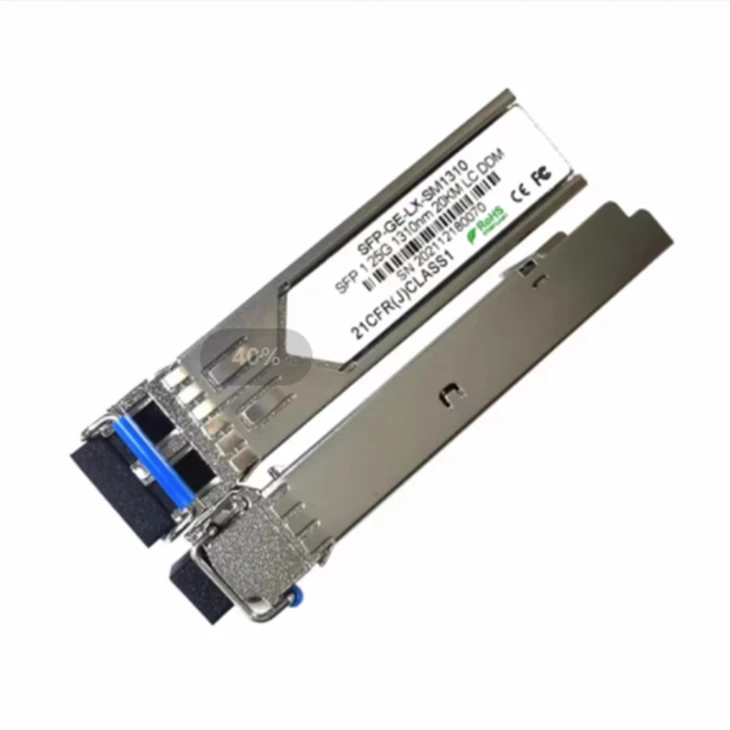
Another type is the 1.25Gbps SFP. This is one of the more common and slower - speed transceivers. It's often used in legacy networks or in applications where the data transfer requirements are not very high. The latency here is generally higher compared to the 10Gbps and 2.5Gbps transceivers, but again, it fits the needs of the networks it serves.
The technology inside the optical transceiver also plays a huge role in determining latency. Modern transceivers are equipped with advanced chipsets and signal - processing algorithms that can significantly reduce latency. These technologies are constantly evolving, and as a result, we're seeing lower and lower latency figures in newer optical transceivers.
The length of the fiber optic cable used with the transceiver is another important factor. The longer the cable, the more time the signal takes to travel through it, which increases latency. So, if you're setting up a network and need to keep latency to a minimum, you'll want to use the shortest cable possible. However, in some large - scale networks, this might not always be feasible.
Now, let's talk about active optical cables (AOCs). These are a bit different from traditional optical transceivers. For instance, the 400Gbps QSFP - DD Active Optical Cable is designed for extremely high - speed data transfer. AOCs generally have lower latency compared to their passive counterparts because they have built - in electronics that help boost the signal and reduce the time it takes for data to travel. The 400Gbps QSFP - DD AOC is a game - changer in high - performance data centers, where every millisecond of latency matters.
Similarly, the 25Gbps SFP28 Active Optical Cable offers a good balance between speed and latency. It's suitable for a wide range of applications, from data center interconnects to high - speed local area networks.
Measuring the latency of optical transceivers is not always straightforward. There are different methods and standards for measuring latency, and the results can vary depending on the testing environment. Some common ways to measure latency include using specialized test equipment that sends a test signal through the transceiver and measures the time it takes to receive the response.
In practical applications, reducing latency is often a top priority. For example, in high - frequency trading, a difference of just a few microseconds in latency can mean the difference between making a profit and taking a loss. In video conferencing, low latency ensures that the conversation flows smoothly without noticeable delays or interruptions.
As an optical transceivers supplier, I understand the importance of providing products with low latency. That's why we invest a lot of time and resources in research and development to improve the performance of our transceivers. We work closely with our customers to understand their specific needs and recommend the right products for their applications.
If you're in the market for optical transceivers and want to learn more about how latency can affect your network, don't hesitate to reach out. Whether you're a small business looking for a cost - effective solution or a large data center in need of high - performance transceivers, we've got you covered. We can help you choose the right product based on your requirements and budget, and ensure that you get the best possible performance from your network. So, if you're interested in purchasing optical transceivers or just want to have a chat about latency and how it impacts your network, feel free to contact us for a friendly and professional consultation.
References:
- Industry reports on optical transceiver technology
- Technical documentation from optical transceiver manufacturers