


Optical Transceiver Manufacturing Capabilities
Chermay Technology manufactures SFP, QSFP, QSFP-DD, and OSFP optical transceiver modules through electronic assembly, optical integration, module configuration, and final enclosure assembly.

Manufacturing Scale & Production Capacity
Chermay Technology operates an optical-module manufacturing facility at Qinshan Street Industrial Park, Haiyan County, Jiaxing, Zhejiang, China, with 6 mass-production lines and a monthly production capacity of 100,000–150,000 high-speed optical modules.
Our Projects
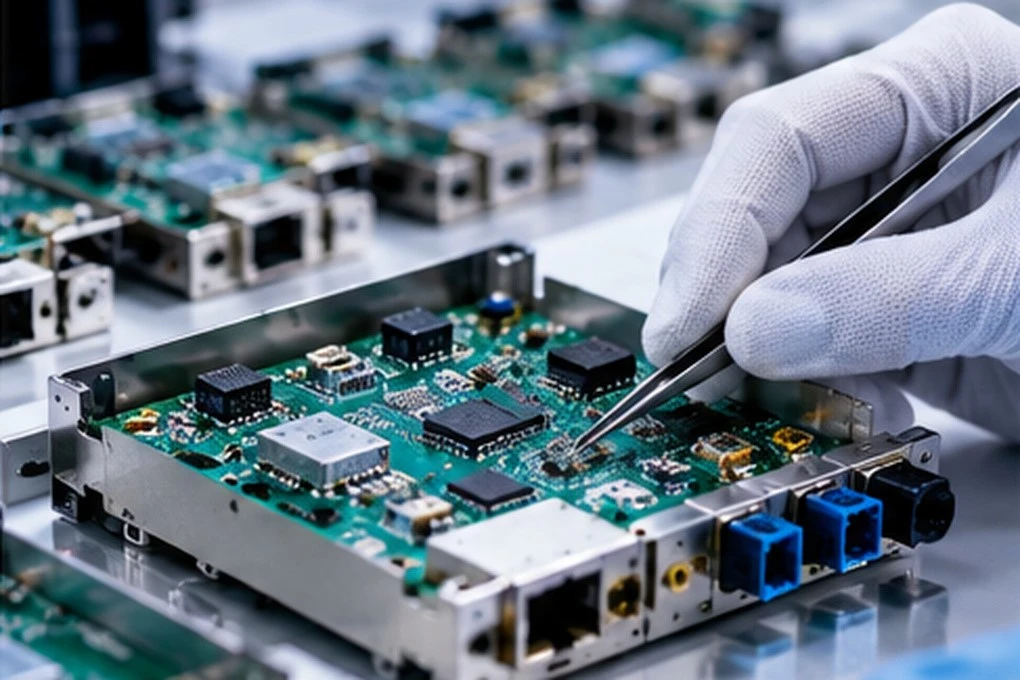
Product & Component Preparation
The product's bill of materials defines the populated PCB, transmitter and receiver devices or optical subassemblies, fiber-side interface, housing, and thermal-contact parts required for the build.
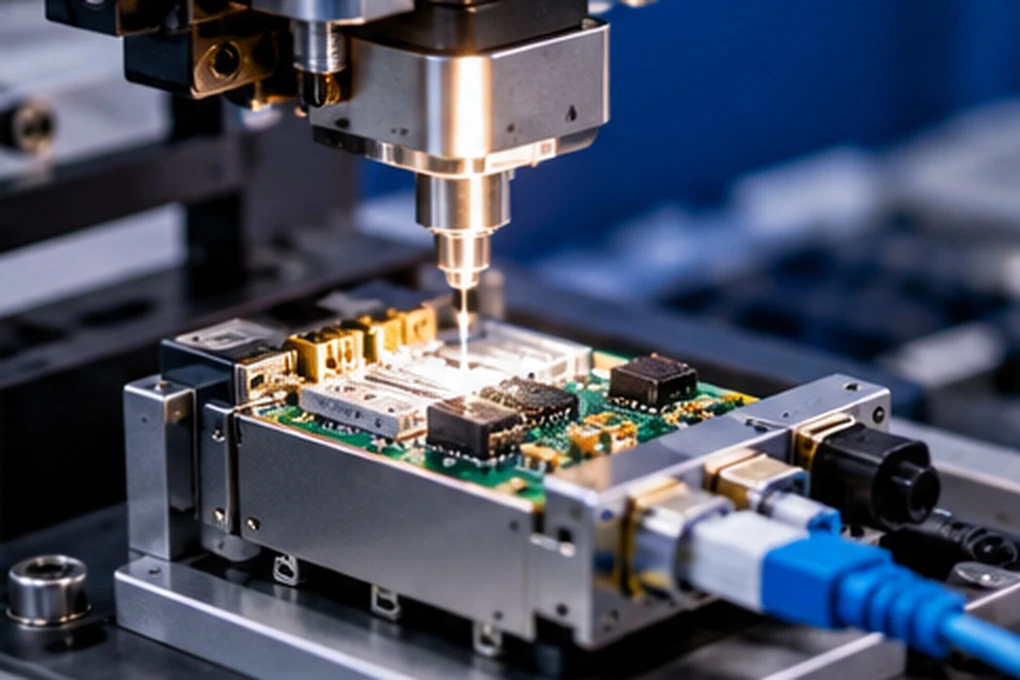
Electronic Module Integration
The populated circuit board is positioned for integration with the optical assemblies. Electrical connections to the transmitter and receiver follow the board layout, including the host interface, power distribution, and control circuits.

Optical Subassembly Integration
The transmitter and receiver optical paths are coupled to the specified fiber interface. Parallel-optics modules require the placement of multiple optical channels, while wavelength-multiplexed designs incorporate the defined multiplexing path.
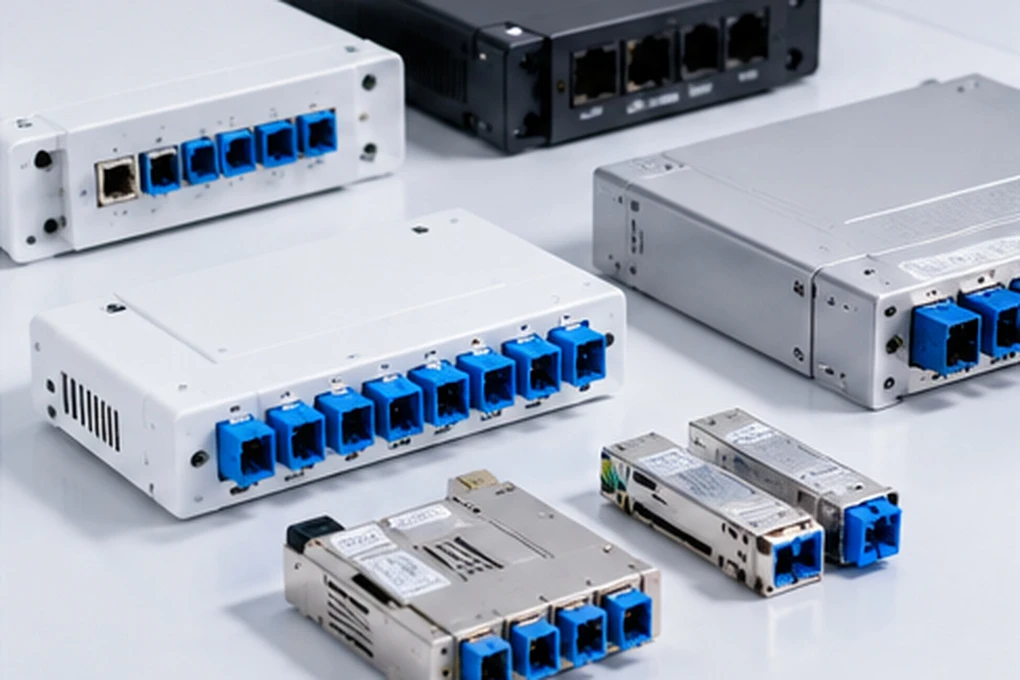
Module Housing Integration
The electronic and optical assemblies are seated within the pluggable housing. The optical-port position, host-edge contacts, retention features, and thermal-contact surfaces follow the enclosure drawing.

Module Configuration
The module's product identification and management parameters are set for the selected version. Supported digital diagnostics and interface data are configured according to the module specification.
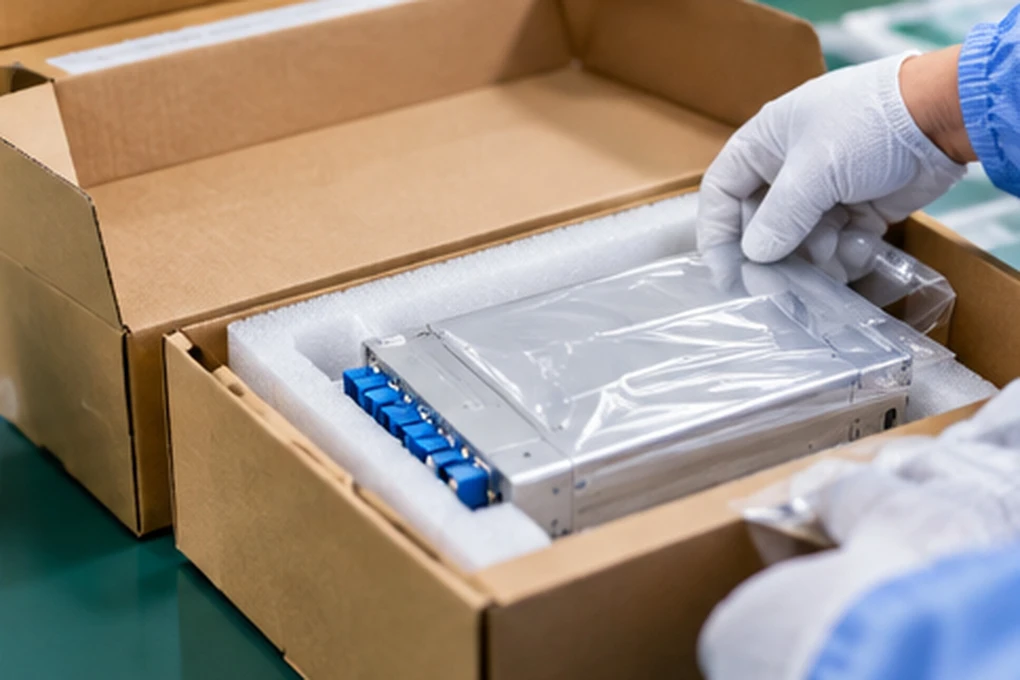
Labeling & Packaging
The completed module receives its product identification label and protective packaging. Packaging accommodates the front optical interface and the module housing during handling and shipment.
Production Equipment & Facilities

PCB Integration Fixtures
PCB holding fixtures position populated boards for electrical and optical integration. Support points follow the board outline and keep the host-edge connector area clear.

Optical-Port Positioning Fixtures
Optical-interface fixtures position the front receptacle relative to the transmitter and receiver assembly. LC duplex and multi-fiber MPO interfaces require different front-end alignment and holding arrangements.

Enclosure Assembly Jigs
Housing jigs position the populated board, optical receptacle, latch, and metal enclosure during final fitting. Fixture geometry follows the shell and retention features specified for each module package.
Product Manufacturing Capabilities
SFP, SFP+ & XFP Platforms
The SFP, SFP+, XFP, and SFP28 lines span 155 Mb/s through 25 Gb/s. Each format has a defined board outline, host interface, and optical-component layout.
40G–200G QSFP Platforms
Published platforms include 40G QSFP+, 100G QSFP28, and 200G QSFP56. These multi-lane modules use product-specific electrical assemblies and optical-channel layouts, with component placement and thermal interfaces defined by the corresponding model.
400G QSFP-DD Modules
The published 400G QSFP-DD range includes SR4, SR8, DR4, DR4+, FR4, and LR4 designs. Assembly configurations cover VCSEL-based multimode optics, EML-based parallel single-mode optics, and CWDM wavelength-multiplexed optical paths.
800G OSFP & QSFP-DD Modules
The published 800G series lists six OSFP variants and one QSFP-DD variant. These models use different optical-engine configurations, including multimode VCSEL and single-mode EML designs, integrated into their specified 800G packages.
Frequently Asked Questions
Are 1.6T and co-packaged optics already in volume production?
-
The current published mass-production statements cover 400G and 800G optical modules. Chermay Technology identifies 1.6T and co-packaged optics (CPO) as roadmap technologies.
Does the published monthly capacity apply to every optical module model?
-
The published figure describes facility-wide high-speed optical-module capacity, not a guaranteed output for each individual part number. Separate per-model production capacities have not been specified.
Can QSFP-DD and OSFP modules use the same enclosure parts?
-
No. QSFP-DD and OSFP have different mechanical outlines and host-cage interfaces. Their housings, retention parts, and associated assembly fixtures follow separate package specifications.
What determines whether an assembled module uses an LC or MPO optical port?
-
The module model and optical architecture determine the port. Published wavelength-multiplexed variants use LC duplex interfaces, while selected parallel-optics designs use MPO-12 or MPO-16 receptacles.
How does a BiDi transceiver build differ from a dual-fiber build?
-
A BiDi module uses different transmit and receive wavelengths over a single fiber connection; a dual-fiber module uses separate transmit and receive fibers. The optical components and front-end connector configuration therefore differ. Both designs appear in Chermay Technology's published SFP/SFP+ families.